

The Reserve Bank can influence the price of money. It cannot manufacture a litre of diesel.
That distinction matters. Reporting ahead of the 29 September RBA decision has focused on whether Governor Michele Bullock and the board will lift the cash rate again, perhaps by more than the usual quarter of a percentage point. At the same time, Treasurer Jim Chalmers faces questions about fuel relief as diesel costs threaten to climb. For families, tradies and small businesses, these are not two separate debates. They land in the same weekly budget.
My view is that inflation must be taken seriously, but so must the way we respond to it. If part of the pressure is coming from imported fuel and disrupted supply, asking mortgage holders alone to carry the adjustment is a blunt solution. We need clear decisions, practical relief where it genuinely helps, and less theatre about a forecast before it becomes fact. For property owners, the question is how all these pressures change the number of buyers who can actually transact.
The shift did not begin at the bowser.
In my 2025 property market report, I looked at the forces already reshaping Adelaide: interest rates, affordability, migration, tax policy and the gap between housing demand and supply. At the time, strong competition and limited choice still gave many sellers the advantage. But a market cannot rely on yesterday’s borrowing power forever.
Strong demand, thin supply
Our market report traced the foundations: growth, affordability pressure, rates and the policy debate.
Pressure begins to stack
My earlier timeline mapped how rate rises, the Iran-related oil shock and living costs could erode buyer capacity over time.
Buyer choice becomes the test
Higher repayments and fuel costs meet a more price-sensitive audience. Watch enquiry, competing offers and time on market, not just headlines.
My timeline from earlier this year set out a possible chain reaction, not a record of outcomes: dearer money, an oil-price shock, higher transport and food costs, tighter household budgets, and then more cautious buyers. That sequence is useful because housing responds with a lag. A forecast chart is not a count of actual sales or an achieved price. The next step is to compare it with the evidence in each local market.
A bigger hike is a proposal, not a decision.
Ahead of the RBA’s 29 September meeting, the reported cash rate stood at 4.35 per cent. A standard 0.25 percentage point increase would make it 4.60 per cent, its highest level since 2011. Some economists, including CreditorWatch’s Ivan Colhoun and EQ Economics’ Warren Hogan, argued for a larger move. That is their case, not an announced decision by the RBA.
The cash-rate question
A comparison of the reported rate and one possible decision, not a historical trend.
Source: rate reporting linked below. The 4.60% figure is arithmetic based on a proposed 0.25 percentage point rise; it is not a confirmed RBA decision.
“A rate headline might be measured in basis points. At the kitchen table, it is measured in choices.”
Tony Lawson’s viewCanstar estimates a quarter-point rise would add about $91 a month to repayments on a $600,000 loan, assuming the increase is passed on. That does not sound enormous in isolation. But families do not pay one increase in isolation: they pay their mortgage alongside power, insurance, groceries and transport. Cumulative pressure is the story.
What 0.25 points could cost, by loan size
The same Canstar estimate scaled across common Adelaide loan sizes.
Derived from the reported Canstar estimate of about $91 a month on a $600,000 loan. Other loan sizes are scaled in proportion for illustration only; they are not Canstar figures. Your actual change depends on your rate, loan term, product and whether your lender passes the rise on in full.

Fuel is not just a line on a receipt.
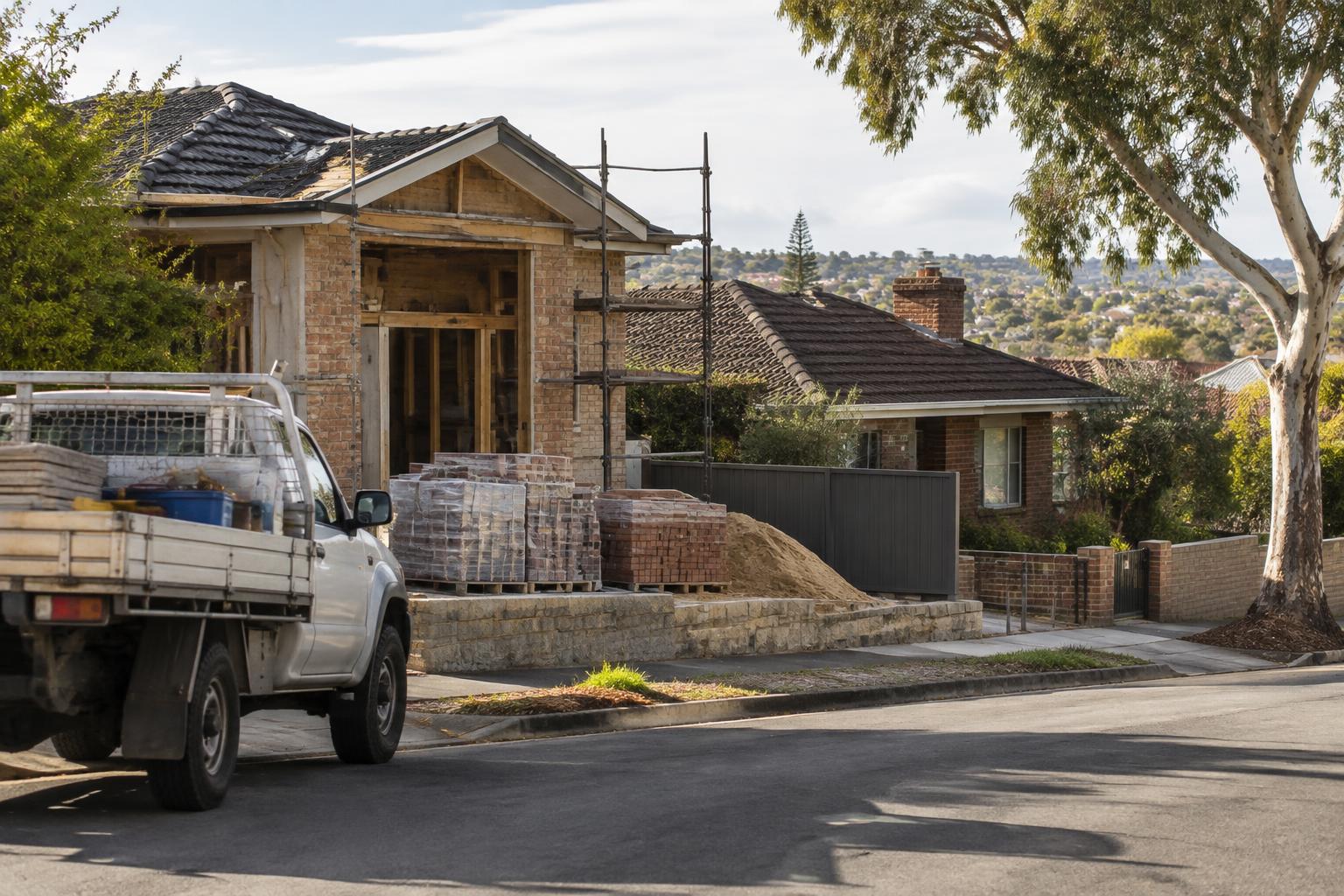
Diesel moves goods, materials and people. A builder’s ute, the truck delivering timber, the freight behind a supermarket shelf and the machinery on a development site all carry a fuel cost. Those costs can make their way into renovations, new homes, food and everyday services.
The second report describes a possible restriction on American diesel exports. Energy analyst Saul Kavonic warns that diesel could reach $4 a litre if that scenario triggers wider supply disruption. Macquarie University’s Lurion de Mello offers a different view: a ban would be more likely to push metropolitan diesel towards $3.20 to $3.30 a litre, primarily a price problem rather than a shortage. Neither is today’s national price. The article cites an Australian Institute of Petroleum average of $2.74 a litre for the week ending 20 September.
Diesel: current average and possible scenarios
These figures are not a timeline or a forecast of what will happen.
Sources: AIP average and analyst estimates as reported in the diesel article linked below. The $3.20 scenario is the lower end of a $3.20–$3.30 range. Scenarios depend on supply conditions and should not be read as realised prices.

Filling an 80-litre ute tank at each price
The same tank, priced at the current average and at the two analyst scenarios.
Simple arithmetic: 80 litres multiplied by the national average of $2.74 and by the $3.20 and $4.00 scenarios described in the reporting linked below. Tank sizes, discounts and regional pricing vary. The scenario figures are not current prices.
Diesel prices are elevated and exposed to international supply and pricing. The earlier temporary excise relief has ended.
Whether US exports will be restricted, whether diesel reaches $4, and whether the government will cut excise again.
I would like to see Canberra treat the risk as more than a petrol-station headline. Treasurer Chalmers should explain the options openly: what targeted fuel relief would cost, who would actually benefit and what Australia can do to strengthen supply resilience. An excise cut might buy time; it cannot create fuel that is not there. Those are different problems and they deserve different answers.
The conflict involving Iran has added volatility to global energy markets. Australia does not need every dramatic fuel-price scenario to come true for the flow-on effects to matter: freight, farming, building materials and site work are all exposed. For a homeowner weighing a renovation against a move, a rising build quote may change the calculation; for a buyer, it may make a move-in-ready home more attractive than a project. It does not mean every builder or every suburb faces the same increase.
Not one crisis. Several decisions colliding.
There is another layer to buyer confidence. AI may reshape some jobs, but it would be irresponsible to turn uncertainty about employment into a prediction of widespread job losses or forced sales. People making a long-term housing decision want confidence in their income, so even uncertainty about work can make some buyers pause. That is a risk to watch, not a reason to declare an employment crisis.
Tax settings matter too. The debate over capital gains tax treatment and incentives for new housing may influence how investors assess existing homes against new builds. Owner-occupiers should not assume an investment-property tax discussion directly changes the tax treatment of their own home. The practical question is whether investor demand, rental returns or new supply change the buyer pool for your property. My tax-change explainer looks at the policy arguments in more detail; confirm the current law and your circumstances with a qualified tax adviser before acting.
And supply is still the counterweight. Adelaide has not suddenly built enough homes to solve its long-term shortage. A buyer’s market can emerge in a price bracket or suburb because buyers are stretched, even while the broader housing supply remains tight. As I argued in my Adelaide market outlook, the supply timeline and changing buyer mix deserve as much attention as the latest rate announcement.
More choice changes the conversation.
I believe we are heading towards a heavier buyer’s market in parts of South Australia. That is my assessment, not a guarantee of a statewide price fall. When borrowing capacity tightens and household bills rise, buyers compare more homes, request conditions and become less willing to overlook defects. Well-presented, realistically priced properties can still sell well. Listings priced for a market that has passed may sit longer and need adjustment.

In The Market Has Changed, I wrote about the moment buyers stop chasing the seller. The signs are practical: fewer qualified enquiries, longer campaigns, repeat offers below the guide and more competing listings that buyers can inspect instead. One quiet open inspection is not enough to call a market. A pattern of feedback across comparable properties is.
“A heavy buyer’s market does not mean your home has no value. It means the asking price must answer a more informed question.”
Tony Lawson’s viewThat is why an honest comparable sale, a clear campaign and a timely response to feedback matter more than an ambitious opening number. My article on fantasy prices explains the cost of letting a listing grow stale.
What you can do now.
If you are staying
Review your loan rate and cash buffer. Ask your lender or broker what a further rise would mean for your repayments, and get detailed quotes before committing to major works. You do not need to sell because a headline says the market is turning.
If you may sell
Get a current appraisal grounded in comparable sales, active competition and realistic buyer budgets. Prepare repairs, presentation and documentation early. Set review points during the campaign so a lack of qualified interest prompts a decision, not weeks of waiting.
If you are buying and selling
Work through the sequence before committing. Know what you can carry if your home takes longer to sell, and agree on a fallback plan with your lender. Buying with more choice helps only when your own sale and finance are manageable.
If you own an investment property
Review your borrowing costs, rental position, maintenance budget and likely buyer pool. Do not make a tax-driven sale decision from a news story; ask a licensed tax adviser about your own position.
There is no value in frightening people into a decision. Whether you are staying, selling or buying, the sensible response is to understand your position, allow for uncertainty and act on current local evidence. Clarity, not pressure.