The ImmigrationEconomy
How population policy is reshaping Australia's housing market, driving rental inflation, and triggering interest rate hikes.
By Tony Lawson · Real Estate Agent, South Australia
Record Population Growth
Australia's population growth has been overwhelmingly driven by net overseas migration, particularly since 2022 when COVID-era borders reopened. The surge far exceeded any notion of "catch-up immigration."
Australia Population Growth by Category
Thousands of persons, annual
Natural population increase has been declining for over a decade, meaning Australia's growth is now almost entirely dependent on immigration. This represents a fundamental structural shift in the economy.
A Brief History of the Immigration-Led Economy
It was the Howard government that ushered in the era of mass immigration. He had a good excuse. The post-millennium once-per-century mining boom really did leave Australia short of workers, and skilled migrants helped keep a lid on strong wage growth, helping to keep interest rates lower than they might otherwise have been.
At that time, Australian cities also had abundant infrastructure, so they could accommodate an influx of people relatively easily. It was a win-win policy.
That had dramatically changed a decade later. The mining boom turned to ashes in 2012, and ten years of population inflows had begun to create shortages of their own in areas of the economy beyond labour, such as housing and roads.
Traditionally, Canberra had cut back immigration at such times to ease pressures on living standards and protect workers' wages during a downturn. But the Abbott government of the day decided instead to conduct a grand experiment. It kept immigration at boomtime levels, which crushed wage growth, exacerbated shortages, and cratered interest rates.
Immigration shifted from a useful economic complement to the primary economic driver, and that changed everything.
The Immigration-Led Economy
The immigration-led economy is the opposite of how a developed economy is supposed to work. In a functional liberal market economy, advances in innovation, technology, and productivity grow national income and the economic capacity to accommodate it.
This is a private investment-led economy that lifts living standards (provided policy shares the productivity gains, which in Australia it did, unlike America).
The immigration-led economy inverts the model. It is defined by shortages of everything except unskilled labour. This kills productivity through crushloaded infrastructure and devolution from technology to cheap-labour business models.
The car wash is a great example. Gone is the efficient, cheap automated machine, and in its place is a very expensive, labour-intensive battery of immigrants wiping windows.
Australia GDP Per Capita Growth
Annual % change
GDP per capita—the true measure of national prosperity—has been falling. While headline GDP growth looks healthy thanks to sheer population numbers, individual Australians are getting poorer in real terms.
Record Arrivals: The Numbers Don't Lie
New modelling by the Institute of Public Affairs reveals the staggering scale of the problem. Net permanent and long-term arrivals hit a record-breaking 480,520 in 2025—exceeding the previous 2023 record by 7 per cent.
Net Permanent & Long-Term Arrivals
Thousands of persons, annual — Source: IPA, ABS
2025 arrivals hit a record-breaking 480,520 — 7% above the previous 2023 record
At the exact same time, housing approvals fell annually by 15 per cent in December 2025. This widening chasm between demand and supply helped push national dwelling prices up by about 7 per cent—nearly $80,000—over the year.
"Since Covid, there has only been one issue talked about regarding house prices, which is supply. In reality, anyone who has done high school economics knows it's supply and demand. One thing we can control is demand from migration. It's that simple."
— Kent Lardner, Head of Research, FoundIt
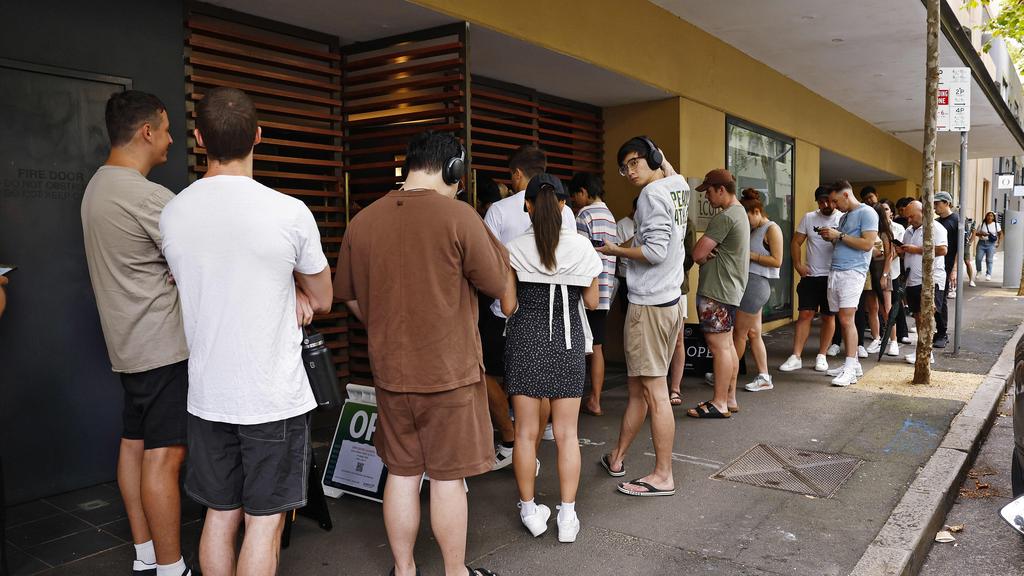
Experts say migration has had the most acute impact on the rental market, where long lines at open homes have become the norm.Picture: Sam Ruttyn
Migration Flows: Before and After COVID
The post-2012 phase of the immigration-led economy was dominated by the relationship with China. Chinese capital flooded in to build apartments for Chinese migrants, and eastern cities experienced an enormous apartment-building boom.
This supply response squashed rents and kept some dwelling prices down—the only period in which population growth and rental growth diverged in recent history. It also enabled budget repair because private investment was leading the economy again, even if it was only to keep pace with population growth.
Overseas Arrivals & Departures
Thousands of persons, annual
After COVID, the immigration-led economy was revived with gusto. Arguments that this was just "catch-up immigration" were ridiculous. Had any of our infrastructure been caught up in the meantime? No. It was another political experiment doubling down on a failing economic model.
Productivity Collapse Exposes the Model
For the vast majority of Australians, the post-COVID immigration surge made things worse twice as fast: healthcare wait times blew out, police were caught short, roads jammed up, an immense housing shortage developed, and homelessness boomed.
Moreover, this time the model was dominated by the relationship with India. Indian migrants did not arrive with a wave of investment. In fact, they tended to send money home.
The supply-side response to booming rental demand didn't happen, and so rental inflation took off. The Albanese government's attempts to remedy this with public housing and gimmicky housing-construction funds only added to the cost of new dwellings, as its failing energy policies did as well.
Rental Crisis Drives Inflation
Immigration-led economic inflation was born from the failure to supply housing at the rate of population growth. Rent and dwelling inflation are strongly correlated with core inflation, which drives RBA policy.
Rental Inflation vs Core Inflation
Annual % change, CPI components
The chart above tells the story clearly. Rental CPI has surged to levels not seen in decades, and it's dragging core inflation with it. This is not demand-pull inflation from a booming economy—it's supply-constrained inflation from a population policy that outstripped the nation's capacity to house people.
What Would Happen If We Cut Migration?
Independent property research group FoundIt has modelled a scenario where migration is cut by roughly 100,000 to return to pre-COVID levels. The results are striking—and offer a roadmap for relief.
Projected Price Growth: Current vs Migration Cut Scenario
Annual % change — Source: FoundIt Research, 2026
Aligning migration with building completions would strip 2–3% off national home price growth annually
Sydney prices, otherwise on track for a 2 per cent gain, would drop by about 1 per cent. Brisbane, Adelaide, and Perth—currently running red-hot—would cool to a more sustainable 3 to 4 per cent annual growth range.
Critically, the relief would target where it's needed most: the sub-$750,000 entry-level market.
"The sub-$750,000 market is the most competitive in the country. That's where first-home buyers reliant on small deposits and investors often compete. If we ease migration, it helps that market."
— Kent Lardner, FoundIt
SQM Research director Louis Christopher agreed, saying migration cuts could "work" and deliver rental relief in "about six months", with the strongest impact in gateway cities Sydney and Melbourne.
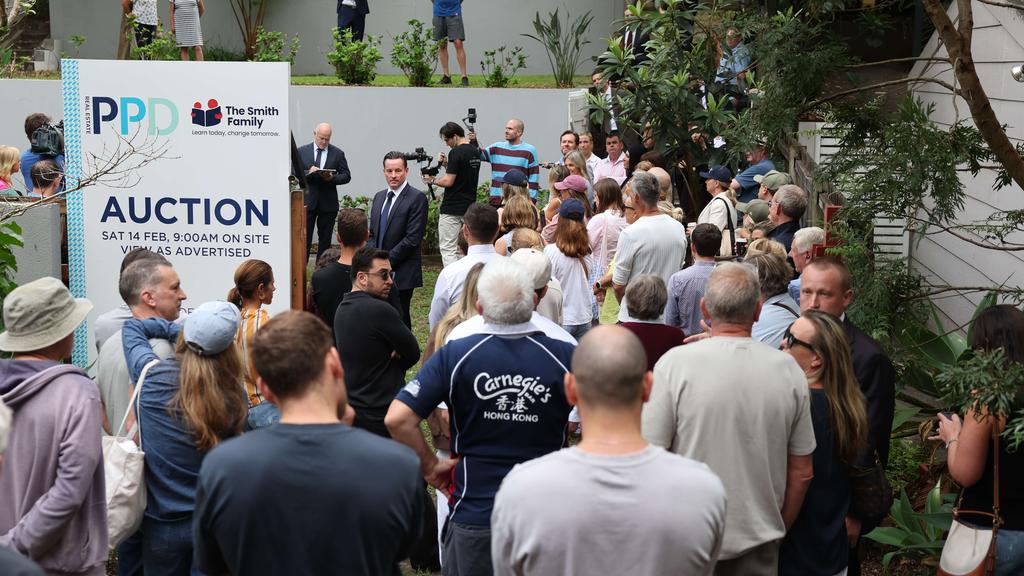
Housing demand remains elevated as higher migration levels drive up rents, which in turn spill over into the purchasing markets.Picture: Rohan Kelly
Immigration & Rate Hikes
Welcome to your first immigration-led economy rate hike. It won't be your last.
The RBA finds itself in an impossible position. Inflation driven by housing shortages cannot be solved by raising interest rates—which, if anything, constrain new housing supply further. Yet the RBA's mandate requires it to respond to above-target inflation.
The result is a policy setting that is out of cycle with the rest of the developed world, where central banks have been cutting rates. Australia stands alone in hiking, and the reason is not a booming economy—it's a population policy that has overwhelmed the nation's infrastructure and housing stock.
Until Canberra meaningfully moderates immigration, the RBA will continue to be forced into rate hikes that hurt ordinary Australians while failing to address the root cause.
The Property Implications
For property owners and investors, the immigration-led economy creates a paradox: while it crushes living standards and productivity, it simultaneously drives relentless demand for housing.
With supply unable to keep pace—particularly in cities like Adelaide, where building activity has lagged the population surge—property values continue to rise. Rental yields remain strong as new arrivals compete fiercely for limited rental stock.
However, immigration-driven rate hikes add a new risk. Higher interest rates hurt borrowing capacity and could slow price growth. The key question for 2026 is whether Canberra moderates immigration enough to ease inflationary pressures, or whether the cycle of population-driven inflation and rate hikes continues.
For Adelaide specifically, the fundamentals remain strong. Relative affordability compared to Sydney and Melbourne continues to attract both interstate and overseas migrants, supporting demand in a market already constrained by low supply.
Demand Stays Strong
Record immigration keeps buyer and renter demand elevated across all markets.
Rates Risk Rising
Immigration-led inflation could trigger further out-of-cycle rate hikes.
Adelaide Resilient
Relative affordability positions Adelaide as a beneficiary of population flows.

Understanding macroeconomic trends is key to making informed property decisions. Let's talk about what this means for your portfolio.
Source: MacroBusiness, ABS, RBA. This is a general market commentary. Please disregard if you have already enlisted another agent. RLA 308543